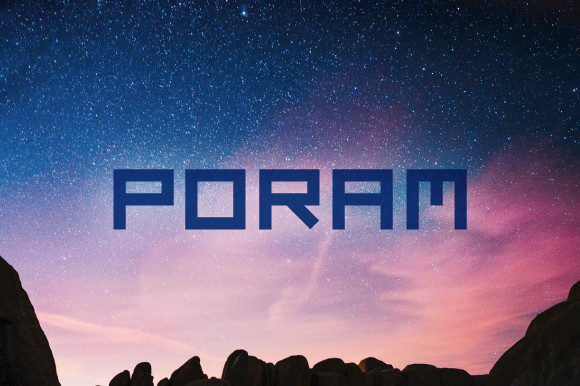
Poram Font Evaluation
In the rapidly evolving landscape of digital and print design, typography serves as a critical component of visual communication. Designers are constantly seeking typefaces that not only convey information but also establish a distinct brand identity. Among the myriad options available, Poram has emerged as a notable choice for projects requiring a specific aesthetic: cool, bold, and robotic. This evaluation explores the characteristics of Poram, its ideal use cases, potential tradeoffs, and how it compares to other typographic solutions in the market.
Understanding the Poram Typeface
Poram is classified as a display font, meaning it is designed primarily for large sizes rather than body text. Its defining characteristic is its "robotic" aesthetic, achieved through geometric precision and sharp angles. The font exudes a sense of modernity and technological advancement, making it suitable for contexts where a futuristic or industrial vibe is desired. Unlike traditional serif or sans-serif fonts that prioritize readability at small sizes, Poram prioritizes visual impact and stylistic statement.
The "cool" aspect of Poram refers to its detached, minimalist feel. It lacks the warmth associated with humanist sans-serifs or the formality of classic serifs. Instead, it presents a clean, almost sterile appearance that can be highly effective in branding for technology companies, gaming interfaces, or modern architectural portfolios. The bold weight of the font ensures that it commands attention, making it an excellent candidate for headlines, logos, and poster designs.
Ideal Use Cases for Poram
Determining whether Poram is the right tool for a project requires understanding where its strengths lie. Based on its design attributes, several scenarios stand out as strong fits.
Web Design and Digital Interfaces
In web design, first impressions are crucial. Poram can be used effectively for hero section headers, navigation menus, or call-to-action buttons where brevity and impact are key. Its robotic nature aligns well with tech startups, software development firms, and cybersecurity brands looking to communicate precision and innovation. However, due to its display nature, it should never be used for paragraphs of text. Pairing Poram with a highly legible sans-serif font for body copy creates a balanced hierarchy.
Business Cards and Stationery
For creative professionals, business cards serve as a tangible extension of their personal brand. Using Poram for a name or job title on a business card can immediately signal a modern, edgy personality. The bold lines of the font ensure that the text remains legible even at small scales, provided the background contrast is high. It is particularly effective for designers, architects, and engineers who want to visually reinforce their professional identity.
Poster and Event Graphics
Event posters, album covers, and promotional banners often rely on typography to set the tone. Poram’s unique touch makes it an excellent choice for music festivals, tech conferences, or art exhibitions that aim to project a futuristic or avant-garde image. The font’s ability to grab attention from a distance makes it a practical choice for large-format printing.
Benefits and Tradeoffs
While Poram offers distinct advantages, it is essential to weigh these against its limitations to make an informed decision.
Benefits
- Distinctive Identity: Poram stands out in a sea of generic fonts. It provides a unique touch that can help a brand differentiate itself.
- Versatility in Application: While limited in scope, it works well across both digital and print media when used correctly.
- Modern Aesthetic: The robotic style aligns with current trends in minimalism and futurism, ensuring the design feels contemporary.
Tradeoffs
- Limited Legibility: As a display font, Poram is not suitable for long-form reading. Overuse can lead to visual fatigue and reduced comprehension.
- Niche Appeal: The cold, robotic nature may not resonate with all audiences. Brands aiming for warmth, approachability, or tradition may find Poram alienating.
- Pairing Challenges: Finding complementary fonts that do not clash with Poram’s strong geometric presence can require careful selection.
Considerations and Alternatives
Before selecting Poram, designers should consider the broader context of their project. If the goal is to create a friendly, community-oriented brand, Poram might be too stark. In such cases, alternatives like Montserrat or Open Sans might offer better balance. Conversely, if the project requires a more aggressive or aggressive robotic look, fonts like Orbitron or Russo One could be worth exploring.
Another consideration is licensing and availability. Not all display fonts are equally accessible or affordable. Ensuring that Poram is properly licensed for the intended use—whether commercial, editorial, or personal—is a critical step in the selection process. Additionally, testing the font across different devices and screen resolutions is advisable to ensure that its sharp edges render cleanly without aliasing issues.
Practical Decision-Making Insights
To determine if Poram aligns with your goals, ask the following questions:
- What is the primary message? Does the message emphasize innovation, technology, and precision? If so, Poram is a strong candidate.
- Who is the target audience? Is the audience tech-savvy and receptive to modern aesthetics? If the audience skews older or prefers traditional values, Poram may not be appropriate.
- Where will the font be used? Will it be used sparingly for impact, or extensively for content? Poram should be reserved for headlines and titles.
- How does it fit with the overall design system? Does Poram complement the existing color palette, imagery, and layout? Visual harmony is key to effective design.
In conclusion, Poram is a specialized tool in the designer’s arsenal. It is not a one-size-fits-all solution but rather a strategic choice for specific contexts. When used judiciously, it can add a layer of sophistication and modernity to web designs, business cards, and other visual communications. By understanding its strengths and limitations, designers can leverage Poram to create impactful, memorable experiences that resonate with their intended audience.