Evaluating Flashy: A Retro Display Font for Modern Design Projects
In the landscape of digital typography, selecting the right typeface is a critical decision that influences brand identity, user experience, and visual hierarchy. Among the myriad options available to designers, Flashy has emerged as a distinct choice for those seeking a blend of nostalgia and contemporary quirkiness. Classified primarily as a retro display font, Flashy offers a unique character set that can elevate specific creative projects while presenting challenges in others. This evaluation explores the characteristics, applications, and limitations of Flashy to help designers determine if it aligns with their current needs.
Understanding the Visual Identity of Flashy
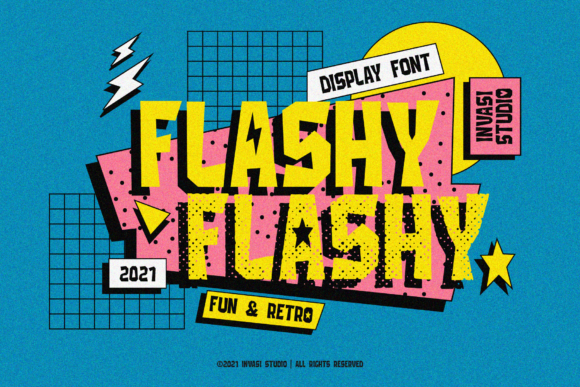
Flashy is not designed for body text or long-form reading. Instead, it belongs to the category of display fonts—typefaces intended for headlines, titles, logos, and short impactful statements. Its design language draws heavily from mid-century aesthetics, incorporating elements reminiscent of vintage signage, carnival posters, and classic entertainment graphics. The characters are modernized, ensuring they render cleanly on high-resolution screens, yet they retain a playful, slightly irregular structure that gives them personality.
The term "quirky" is often used to describe Flashy because its letterforms avoid strict geometric uniformity. Instead, they feature varied stroke weights, rounded terminals, and occasional decorative flourishes that catch the eye. This makes the font inherently "flashy," living up to its name by demanding attention. For designers looking to inject energy into a static layout, these subtle irregularities provide a sense of movement and dynamism that standard sans-serif or serif fonts might lack.
Why Designers Consider Flashy
When evaluating a typeface like Flashy, the primary motivation is usually the desire to create an immediate emotional connection with the viewer. Here are several reasons why this font appears on many designers' radar:
- Nostalgic Appeal: In an era where retro trends continue to cycle through fashion and design, Flashy taps into the comfort and familiarity of past decades without feeling dated. It bridges the gap between old-school charm and modern digital execution.
- High Visibility: Due to its bold and distinctive shapes, Flashy stands out in crowded visual environments. It is effective for call-to-action buttons, sale banners, and hero sections where grabbing attention is paramount.
- Versatility within Niche Markets: While not suitable for corporate minimalism, Flashy fits perfectly within industries such as entertainment, food and beverage, children’s products, and creative agencies. It communicates fun, approachability, and creativity.
- Easy Pairing Potential: Because Flashy is visually loud, it pairs well with clean, neutral sans-serif fonts for secondary information. This contrast allows designers to maintain readability while using Flashy for emphasis.
Benefits and Practical Applications
The strength of Flashy lies in its ability to set a tone quickly. When used correctly, it reduces the cognitive load required for a viewer to understand the mood of a page. Below are specific scenarios where Flashy proves to be a strong fit:
Event and Entertainment Marketing
For concert flyers, festival websites, or theater promotions, Flashy captures the excitement of live events. Its energetic lines mirror the vibrancy of performances, making it an intuitive choice for event organizers who need to convey atmosphere instantly.
Food and Beverage Branding
Retro fonts have long been associated with diners, ice cream shops, and craft breweries. Flashy continues this tradition but with a cleaner finish. It works exceptionally well for menu headers, packaging labels, and social media graphics for brands that want to appear friendly and indulgent rather than formal.
Creative Portfolios and Personal Brands
Freelancers in graphic design, illustration, or video editing may use Flashy in their personal branding materials to showcase their own creative flair. Using a quirky font signals to potential clients that the designer is willing to take risks and think outside traditional boundaries.
Tradeoffs and Limitations
No typeface is universally applicable, and Flashy comes with significant constraints that designers must acknowledge before integrating it into a project. Understanding these tradeoffs is essential for avoiding common typographic pitfalls.
Readability Concerns
Flashy is strictly a display font. Attempting to use it for paragraphs of text will result in poor legibility and reader fatigue. The irregular character shapes and decorative elements distract the eye, making scanning difficult. Designers must ensure that all supporting copy uses a highly readable, neutral typeface to balance the composition.
Professional Context Sensitivity
Due to its informal and playful nature, Flashy is generally inappropriate for serious industries. Financial institutions, healthcare providers, legal firms, and government entities typically require typefaces that convey stability, trust, and authority. Using Flashy in these contexts could undermine credibility and make the organization appear unprofessional or frivolous.
Overuse Risks
Because Flashy is so visually dominant, overusing it can lead to visual clutter. If every headline on a webpage uses Flashy, the design loses hierarchy and impact. The font should be reserved for key moments of emphasis. Strategic restraint ensures that when Flashy does appear, it retains its power to attract attention.
Decision-Making Insights: Is Flashy Right for You?
To determine whether Flashy is the correct tool for your project, consider the following checklist:
- What is the primary goal of the design? If the goal is to entertain, excite, or evoke nostalgia, Flashy is a strong candidate. If the goal is to inform neutrally or establish corporate seriousness, look elsewhere.
- Who is the target audience? Does the audience respond to playful, vibrant aesthetics? Younger demographics and creative consumers are often more receptive to quirky typography than conservative business audiences.
- How will the font be paired? Can you identify a complementary sans-serif or slab-serif font that will handle the body text? Successful use of Flashy depends heavily on this contrast.
- Where will it be displayed? Ensure the font renders well at various sizes. Display fonts often lose detail or become pixelated when scaled down too small. Test Flashy at the actual sizes it will be used in the final output.
Alternatives to Consider
If Flashy does not fully meet your requirements, other retro-inspired display fonts may offer different nuances. Fonts like Bebas Neue provide a tall, condensed retro feel that is more modular and less quirky. Lobster offers a similar handwritten retro aesthetic but with a more consistent flow. For a sharper, more industrial retro look, Oswald might be preferable. Evaluating these alternatives helps refine the selection process based on the specific shade of "retro" desired.
Conclusion
Flashy is a specialized tool in the designer’s arsenal. It is not a workhorse font for everyday communication but rather a spotlight effect for specific creative moments. By understanding its retro-modern character, recognizing its limitations in professional and long-form contexts, and pairing it wisely with neutral typefaces, designers can leverage Flashy to create memorable, engaging visual experiences. For projects that benefit from a burst of personality and nostalgic charm, Flashy remains a compelling and effective choice.