Brakes and Brakes: Evaluating a Graffiti-Styled Display Font for Urban Design Projects
In the realm of graphic design, typography serves as the visual voice of a brand or project. When the goal is to convey energy, rebellion, or raw urban authenticity, standard sans-serif or serif fonts often fall short. This is where display fonts with distinct character sets come into play. Brakes and Brakes is one such typeface, designed specifically to capture the essence of street art and graffiti culture. It offers designers a tool that bridges the gap between digital precision and analog chaos, making it a compelling option for projects requiring an edgy, high-impact aesthetic.
For professionals aged 20 to 50 who frequently navigate the intersection of commercial design and subcultural aesthetics, understanding the nuances of a font like Brakes is essential. It is not merely a decorative element; it is a strategic choice that influences readability, brand perception, and emotional resonance. This analysis explores the characteristics of Brakes, its practical applications, and how it compares to broader categories of urban typography, helping you determine if it fits your specific creative needs.
The Anatomy of Urban Typography
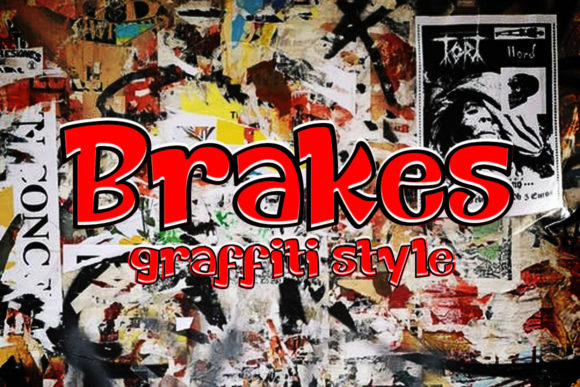
To appreciate Brakes, one must first understand what defines the "graffiti-styled" category in digital typography. Unlike traditional calligraphy, which emphasizes flow and elegance, graffiti-inspired fonts prioritize impact, irregularity, and texture. These typefaces often mimic the look of spray paint, marker strokes, or tags found on city walls. They feature jagged edges, uneven baselines, and sometimes overlapping elements that suggest movement and speed.
Brakes and Brakes embodies these traits without descending into illegibility. The font retains a structured underlying grid, ensuring that while the letters appear wild and untamed, they remain functional for various design layouts. This balance is crucial. Many free or low-quality graffiti fonts suffer from poor kerning or inconsistent stroke weights, which can frustrate designers during the layout process. Brakes addresses this by offering a polished version of street art, suitable for professional environments where clarity cannot be entirely sacrificed for style.
The name itself, Brakes and Brakes, suggests a theme of motion and stopping—a dynamic interplay that mirrors the visual tension in the letterforms. This thematic consistency adds depth to the font’s appeal, allowing it to resonate more strongly with audiences familiar with automotive culture, skateboarding, or hip-hop history.
Best-Fit Use Cases and Applications
Not every design project benefits from a heavy, graffiti-style font. Brakes is best utilized in contexts where its aggressive tone aligns with the message being conveyed. Below are several scenarios where this font shines, along with considerations for each.
- Apparel and Streetwear: T-shirts, hoodies, and caps are perhaps the most natural home for Brakes. The font’s bold presence translates well to fabric printing, especially when paired with minimalist backgrounds that allow the lettering to stand out. For brands targeting youth demographics or those rooted in skate culture, Brakes provides immediate visual credibility.
- Sportswear and Athletic Branding: Sports logos and merchandise often require fonts that evoke power and speed. The sharp angles and dynamic slant of Brakes can enhance the feeling of action. However, designers should avoid using it for small print sizes, as the intricate details may become muddy on smaller garment tags or labels.
- Event Posters and Flyers: For concerts, festivals, or local events with an underground vibe, Brakes serves as an excellent headline font. Its ability to grab attention in crowded visual spaces makes it ideal for print media where competition for eyesight is fierce. Pairing it with distressed textures or neon color palettes can amplify its effectiveness.
- Digital Advertisements and Social Media Graphics: In the fast-scrolling world of social media, static images need strong focal points. Brakes works well in banner ads or Instagram stories where quick recognition is key. Its distinctive shape helps break through the visual noise of user feeds.
Conversely, Brakes is generally unsuitable for body text, long-form articles, or corporate communications where trust and neutrality are paramount. Using such a stylized font for legal disclaimers or instructional manuals would undermine the seriousness of the content. Recognizing these boundaries is part of effective typographic hierarchy.
Comparative Analysis: Brakes vs. Traditional Display Fonts
When evaluating typography, designers often compare specialized fonts against broader categories. How does Brakes stack up against other common choices?
Brakes vs. Standard Sans-Serifs (e.g., Helvetica, Arial)
Standard sans-serifs are the workhorses of design—clean, neutral, and highly readable. They are versatile but lack personality. Brakes, by contrast, brings immediate attitude. If a project requires a modern, clean, and approachable feel, a standard sans-serif is the safer bet. However, if the goal is to disrupt expectations and create a memorable, loud impression, Brakes offers a distinct advantage. The tradeoff is versatility: Brakes is niche, whereas sans-serifs are universal.
Brakes vs. Handwritten or Script Fonts
Script fonts offer fluidity and a personal touch, often associated with creativity or luxury. While both scripts and graffiti fonts aim for uniqueness, their emotional tones differ. Scripts tend to feel organic and flowing, while Brakes feels mechanical, rough, and constructed. For a brand seeking elegance or intimacy, a script might be preferable. For a brand emphasizing grit, durability, or rebellion, Brakes is the stronger candidate.
Brakes vs. Other Graffiti Fonts
The market contains numerous fonts claiming a "street" aesthetic. Some lean heavily into realism, mimicking the drips and splatters of actual spray paint. Others take a more geometric, vector-based approach. Brakes falls somewhere in the middle. It avoids excessive clutter, making it easier to integrate into complex designs. Fonts that are overly detailed can clash with imagery or become illegible at lower resolutions. Brakes’ cleaner execution allows it to scale better across different mediums, from large billboards to small mobile screens.
Decision Factors: When to Choose Brakes
Selecting the right typeface involves weighing several factors beyond mere aesthetics. Here are practical considerations to guide your decision-making process when evaluating Brakes for a project.
- Brand Identity Alignment: Does your brand voice match the font’s energy? If your company values tradition, stability, or subtlety, Brakes will likely create cognitive dissonance. If your brand is youthful, daring, or counter-cultural, the alignment will be seamless.
- Readability Requirements: Assess the intended size and context. For headlines and logos, Brakes excels. For paragraphs or dense information, it fails. Ensure you have complementary fonts available for supporting text.
- Licensing and Usage Rights: As with any commercial font, verify the licensing terms. Some display fonts restrict usage in certain industries or limit the number of impressions. Understanding these constraints prevents legal issues down the line.
- Technical Compatibility: Check how the font behaves in your design software. Does it support ligatures? Are there alternative glyphs for punctuation? A robust font family enhances workflow efficiency.
Limitations and Tradeoffs
No single typeface is perfect, and Brakes has its limitations. Its strong stylistic identity means it can dominate a design if not handled carefully. Overusing Brakes—such as applying it to multiple lines of text or pairing it with similarly chaotic elements—can result in visual fatigue. The viewer’s eye may struggle to find a resting place, leading to a cluttered composition.
Additionally, the font’s association with street art carries cultural connotations. In some contexts, this association may be positive, signaling authenticity and coolness. In others, it may be perceived as unprofessional or juvenile. Designers must be aware of their target audience’s cultural background and expectations. What reads as "cool" in one demographic might read as "unrefined" in another.
Furthermore, customization can be challenging. Because Brakes is already highly stylized, modifying its shapes to fit a specific logo mark can be difficult without losing its core character. It is often more effective to use the font as-is and rely on layout, color, and imagery to achieve the desired effect.
Final Thoughts on Integration
Typography is a powerful tool for communication, and choosing the right font is a critical step in the design process. Brakes and Brakes offers a unique solution for designers seeking to inject urban energy and street-style flair into their work. Its blend of graffiti aesthetics and functional design makes it a valuable asset for apparel, sports, and entertainment industries.
However, success with Brakes depends on restraint and context. It should be used strategically to highlight key messages rather than as a default choice for all text. By understanding its strengths, limitations, and appropriate use cases, designers can leverage Brakes to create impactful, memorable visuals that resonate with their audience. Whether you are designing a new sneaker line, a music festival poster, or a digital campaign, considering the specific role of typography will help you make informed decisions that elevate your overall design quality.