Come Back Font Review
When designing visual content, particularly for seasonal events or niche creative projects, the choice of typography plays a pivotal role in establishing mood and readability. For designers and crafters looking to capture specific atmospheric tones, finding the right typeface is often the most challenging step. One font that has gained attention in this space is Come Back, a display typeface characterized by its cool and spooky aesthetic. This review evaluates the font’s design characteristics, ideal use cases, limitations, and practical considerations to help you determine if it aligns with your current project requirements.
Understanding Come Back: Design Characteristics
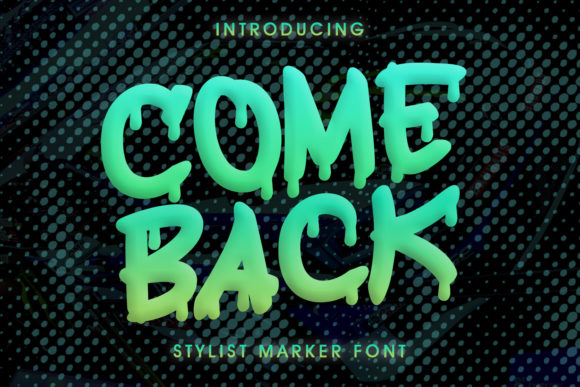
Come Back is not a standard body text font; it is classified as a display font. Display fonts are designed to be used at large sizes, such as in headlines, posters, logos, and banners, where their unique stylistic features can be fully appreciated without compromising legibility. The font draws heavily from horror and Halloween aesthetics, featuring sharp edges, irregular forms, and a distinctively eerie vibe. Its name itself suggests a narrative element, evoking themes of return, mystery, or supernatural presence.
The visual language of Come Back relies on high contrast and jagged geometry. Unlike clean, modern sans-serif fonts that prioritize neutrality, this typeface is expressive and emotive. It mimics the look of distressed materials, scratchy handwriting, or even organic decay, depending on how it is rendered. This makes it an immediate candidate for projects requiring a sense of unease, excitement, or festive spookiness. However, because it is a decorative font, it lacks the subtle nuances required for extended reading passages.
Why Designers Choose Come Back
There are several compelling reasons why a designer might select Come Back for their toolkit. The primary driver is thematic alignment. If you are creating marketing materials for a Halloween party, a haunted house attraction, or a seasonal product launch, this font provides instant genre recognition. It communicates the intended atmosphere before the viewer even reads the text.
- Immediate Atmospheric Impact: The font’s spooky nature allows for quick emotional connection with the target audience.
- Versatility in Craft Projects: Beyond digital design, Come Back is suitable for physical crafts. It works well when cut out for paper decorations, printed on t-shirts, or embossed on custom packaging.
- Visual Hierarchy: As a display font, it serves effectively as a headline anchor, drawing the eye immediately to key messages.
Furthermore, the font’s "cool" factor—often interpreted as stylishly edgy rather than purely terrifying—makes it accessible for a broader range of creative ideas. It does not need to be limited to traditional horror tropes; it can be adapted for rock concert flyers, mystery book covers, or avant-garde art installations.
Evaluating Benefits and Tradeoffs
While Come Back offers strong aesthetic benefits, it comes with inherent tradeoffs common to all decorative typefaces. Understanding these distinctions is crucial for effective design implementation.
Benefits
The strongest benefit of Come Back is its ability to stand out. In a digital landscape saturated with uniform geometric sans-serifs, a font with such distinct personality commands attention. It reduces the need for additional graphic elements to convey theme, as the typography itself tells the story. Additionally, its suitability for both digital and print media ensures that it is a versatile asset for multi-channel campaigns.
Tradeoffs and Limitations
The most significant limitation is legibility. Attempting to use Come Back for body text will result in reader fatigue and confusion. The irregular shapes and potential lack of clear character differentiation (such as between similar letters) make it unsuitable for paragraphs. Designers must pair it with simpler, more neutral fonts for supporting text.
Another consideration is overuse. Because the font is so visually loud, using it excessively can lead to visual clutter. It works best when applied sparingly as a focal point. Furthermore, the "spooky" theme may not resonate with all audiences. For corporate communications, educational materials, or family-friendly brands that wish to avoid any hint of fear or darkness, this font would be inappropriate regardless of its technical quality.
Situational Fit: When to Use Come Back
Determining whether Come Back is the right choice depends largely on the context of your project. It is a strong fit for:
- Halloween Campaigns: From social media graphics to event invitations, the font aligns perfectly with October-themed branding.
- Niche Entertainment: Horror movie posters, escape room advertisements, and paranormal investigation branding benefit from its authentic tone.
- Artistic Expression: For artists exploring themes of mortality, memory, or the uncanny, the font’s distressed nature adds depth to the visual narrative.
- Limited-Edition Merchandise: T-shirts, mugs, or stickers with short, punchy slogans gain character when set in Come Back.
In these scenarios, the font acts as a thematic amplifier, reinforcing the message through visual style.
When to Consider Alternatives
There are situations where Come Back may not be the optimal choice. If your goal is clarity above all else, such as in instructional manuals, news articles, or user interface design, you should avoid decorative fonts entirely. Similarly, if the project requires a playful or whimsical tone rather than a spooky one, alternatives like rounded sans-serifs or handwritten scripts would be more appropriate.
Additionally, if you need a font that supports multiple languages or extensive character sets, you must verify the font’s licensing and technical capabilities. Some display fonts have limited glyph coverage, which can restrict their usability in international contexts. Always check the technical specifications before committing to a typeface for global distribution.
Practical Decision-Making Insights
To decide if Come Back fits your needs, consider the following questions:
- What is the primary emotion? Does your project require eeriness, suspense, or edginess? If yes, this font is a strong contender.
- How much text is needed? If you only need headlines or short phrases, Come Back will shine. If you need long-form content, choose a complementary body font instead.
- Who is the audience? Ensure the spooky aesthetic aligns with your audience’s expectations and comfort levels.
By balancing aesthetic appeal with functional requirements, you can leverage Come Back effectively. It is a specialized tool in the designer’s arsenal, perfect for adding a touch of the macabre to creative endeavors. Whether you are crafting a digital poster or a physical Halloween decoration, its distinctive style offers a unique way to engage viewers. However, success lies in restraint—using it where it enhances the message without overwhelming the viewer. With careful application, Come Back can transform ordinary designs into memorable experiences, proving that the only limit is indeed your imagination.