Skeleton: The Cool, Creepy Display Font for Bold Designs
In the crowded landscape of digital and print design, standing out requires more than just a compelling message; it demands a visual voice that commands attention. Enter Skeleton, a display font that bridges the gap between the macabre and the modern. It is not merely a typeface; it is an atmospheric tool designed to inject personality, tension, and a distinctively cool aesthetic into your projects. Whether you are designing a horror movie poster, a punk rock album cover, or a minimalist brand identity that wants to whisper danger, Skeleton offers a unique structural integrity that few other fonts can match.
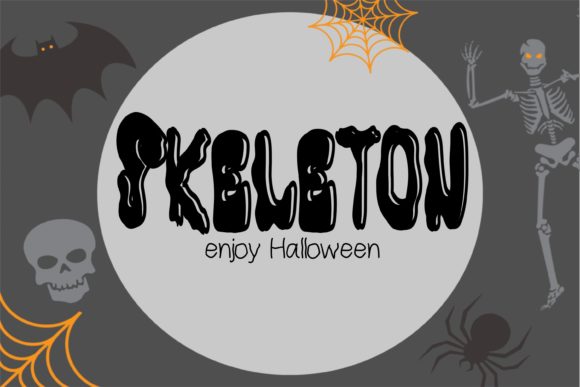
At its core, Skeleton is defined by its stark, bone-like geometry. The letterforms mimic the skeletal structure of the human body—clean lines, sharp angles, and a hollowed-out elegance that feels both ancient and contemporary. This "cool and creepy" duality is precisely what makes it such a wonderful asset to any font library. It does not scream for attention in the chaotic way some novelty fonts do; instead, it holds space with a quiet, unsettling confidence. For professionals who understand that typography is the first layer of communication, adding Skeleton to your toolkit means having access to a typeface that can instantly elevate the mood of any creation.
The Anatomy of Atmosphere
Why does a font need to be "creepy" to be effective? In design, atmosphere is everything. A reader’s emotional response to text begins before they even process the words themselves. Skeleton leverages this psychological trigger by utilizing negative space and rigid construction to evoke feelings of vulnerability, strength, or unease. Unlike standard serif or sans-serif fonts that aim for neutrality, Skeleton has a strong point of view.
Consider the difference between using a standard bold sans-serif for a headline and using Skeleton. The former says, "Here is information." The latter says, "This is significant, perhaps dangerous, and definitely memorable." This shift in tone is invaluable for creators looking to solve specific communication problems. If you are trying to convey urgency, mortality, or raw power, Skeleton provides a visual shorthand that bypasses cognitive load and hits the viewer on an instinctual level. It simplifies the decision-making process for designers who know they want impact but struggle to find a typeface that balances readability with extreme character.
Practical Applications Across Industries
While one might immediately associate Skeleton with Halloween decorations or horror-themed content, its utility extends far beyond niche seasonal marketing. Its versatility lies in its ability to act as a powerful accent font that can ground a design without overwhelming it. Here is how different professionals can leverage Skeleton to improve their results:
- Event Marketers and Promoters: For live events, particularly those involving music festivals, escape rooms, or theatrical performances, the right typography sets the ticket-buying expectation. Skeleton’s eerie aesthetic can create a sense of anticipation and intrigue. When used for event titles or date stamps, it signals to the audience that this is an experience, not just a gathering.
- Branding Specialists for Niche Businesses: Small business owners in the craft beer industry, tattoo parlors, vintage clothing stores, or alternative fashion labels often seek identities that reject corporate blandness. Skeleton allows these brands to communicate heritage, edge, and authenticity. It helps strengthen communication by aligning the visual identity with the brand’s rebellious or historical values.
- Digital Content Creators and Bloggers: In an era where screen real estate is limited, headlines must pop. Skeleton works exceptionally well for pull quotes, section headers, or featured post titles. Its high contrast ensures legibility even at smaller sizes on mobile devices, while its unique shape prevents the content from blending into a sea of generic web typography. This improves presentation and keeps readers engaged longer.
- Educators and Publishers: For textbooks or educational materials dealing with anatomy, history, archaeology, or forensic science, Skeleton adds a layer of thematic relevance. It can be used sparingly in chapter headings or sidebars to reinforce the subject matter, making the learning material feel more immersive and less dry.
Enhancing Creativity Through Constraint
One of the most overlooked benefits of using a specialized display font like Skeleton is how it can actually spark creativity. When a designer is faced with a blank canvas, the infinite possibilities can sometimes lead to paralysis. Having a strong, opinionated font like Skeleton in your library imposes a creative constraint that can be liberating. It forces the designer to build the rest of the layout around its strong geometric bones.
This approach supports goals related to efficiency and time management. Instead of spending hours tweaking kerning and weight to make a standard font look "unique," a designer can drop in Skeleton and immediately have a focal point. From there, the design challenge becomes one of balance: how do we let Skeleton shine without letting it dominate? This problem-solving dynamic streamlines the workflow, allowing creators to focus on composition and color rather than starting from scratch every time.
Strategic Pairing and Limitations
To get the most out of Skeleton, it is crucial to understand where it fits and, equally important, where it does not. Like any tool, it has limitations. Skeleton is a display font, meaning it is designed for large sizes and short bursts of text. Using it for body copy will result in fatigue and poor readability. The "creepy" aesthetic can also become overwhelming if overused; too much Skeleton can turn a professional document into a costume party flyer.
The key to success lies in pairing. Skeleton pairs beautifully with clean, neutral sans-serifs or elegant serifs. The contrast between the rough, skeletal texture of the display font and the smooth, orderly nature of a secondary font creates visual tension that is pleasing to the eye. For example, using Skeleton for a main title and a lightweight Helvetica or Garamond for the subtitle creates a hierarchy that guides the reader’s eye effectively. This combination solves the problem of legibility while maintaining stylistic flair.
Furthermore, consider the context of your audience. While Skeleton is a wonderful asset for adult audiences aged 20–50 who appreciate edgy or artistic designs, it may not be appropriate for children’s books, medical advice sites, or financial reports where trust and calm are paramount. Understanding this fit consideration is vital for responsible design. It ensures that the font enhances the creation rather than distracting from its purpose.
Building a Versatile Toolkit
For freelancers, entrepreneurs, and hobbyists alike, curating a font library is an investment in future productivity. You never know when a project will require a specific mood or tone. By including Skeleton in your collection, you are preparing for those moments when a standard font falls flat. It adds depth to your repertoire, allowing you to pivot quickly between friendly and approachable, or serious and striking.
Ultimately, Skeleton is about enhancement. It has the potential to transform a mundane layout into something that lingers in the mind. It is cool because it is understated yet impactful; it is creepy because it taps into primal associations with structure and fragility. Whether you are simplifying decisions for a client who wants "something bold" or solving a creative block by introducing a new visual element, Skeleton delivers. It is a testament to the power of thoughtful typography to support goals, improve presentation, and connect with audiences on a deeper, more visceral level. Keep it in your library, use it with intention, and watch your creations gain a spine of their own.